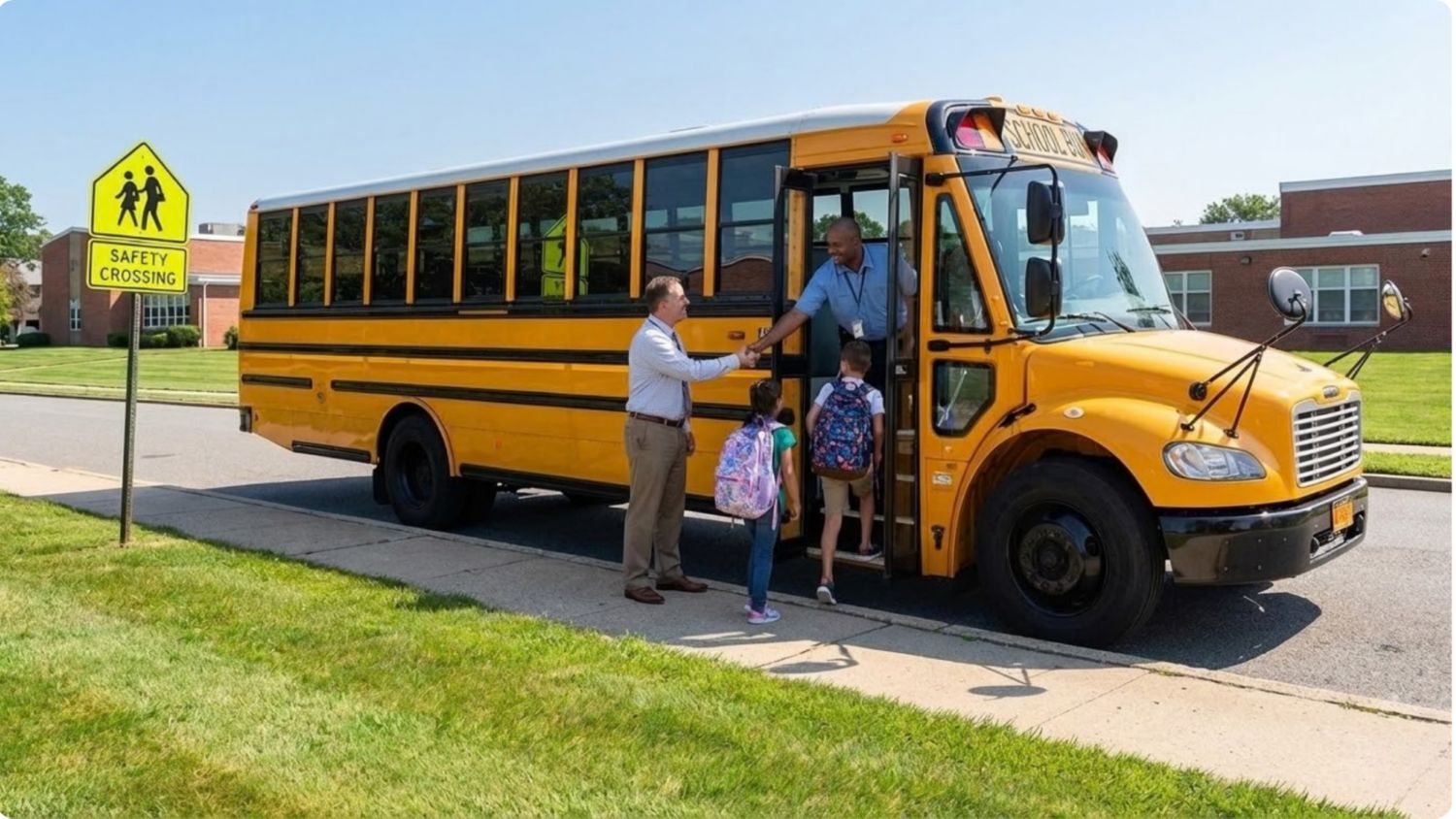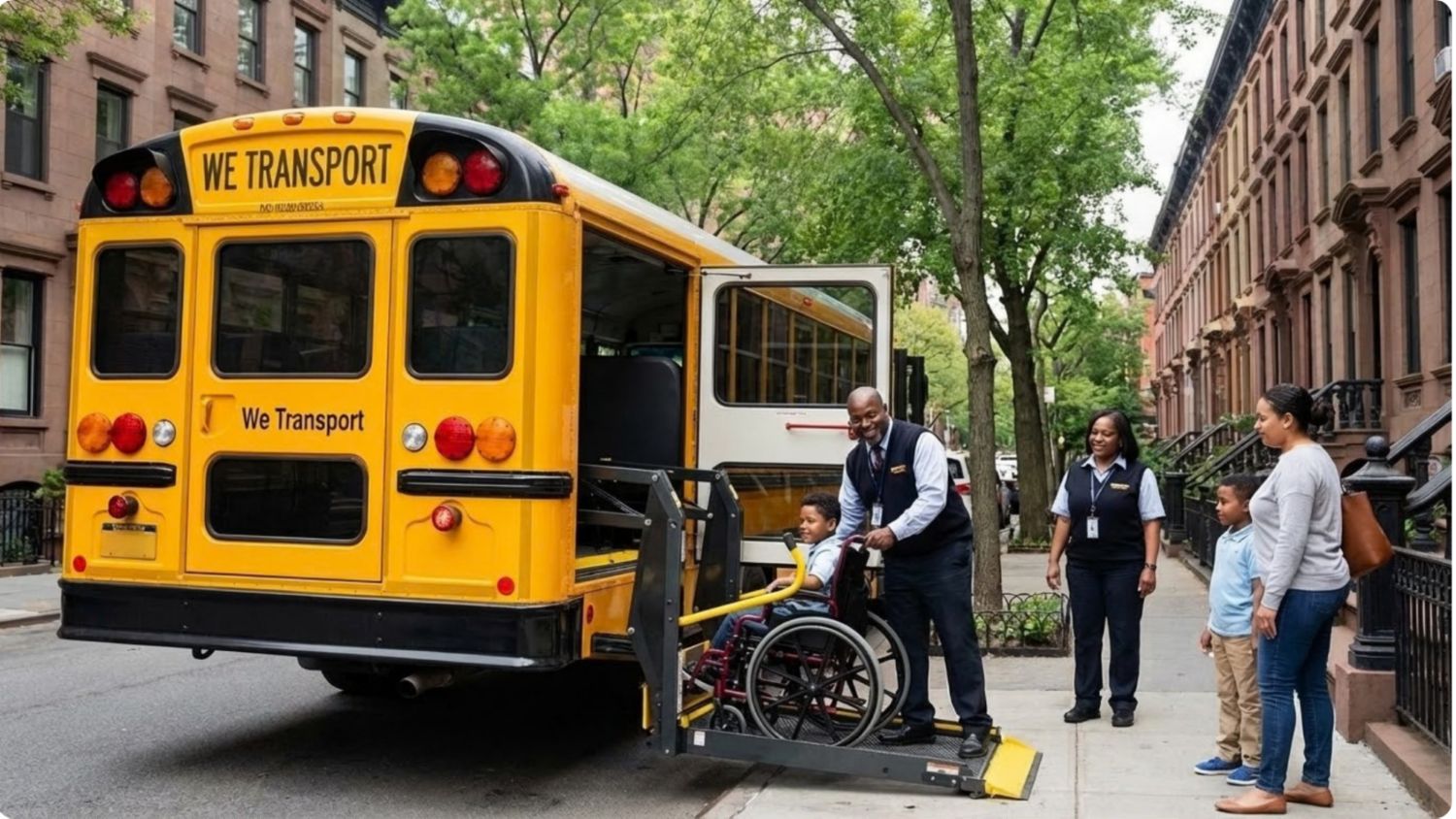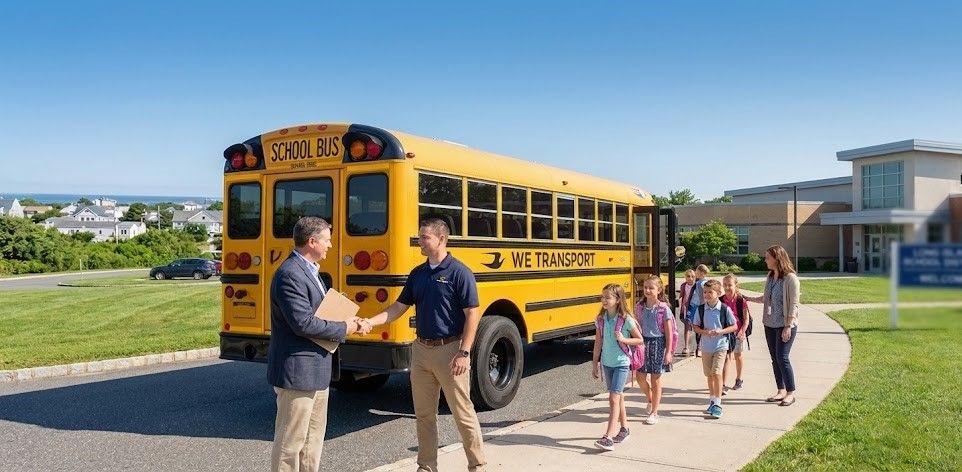
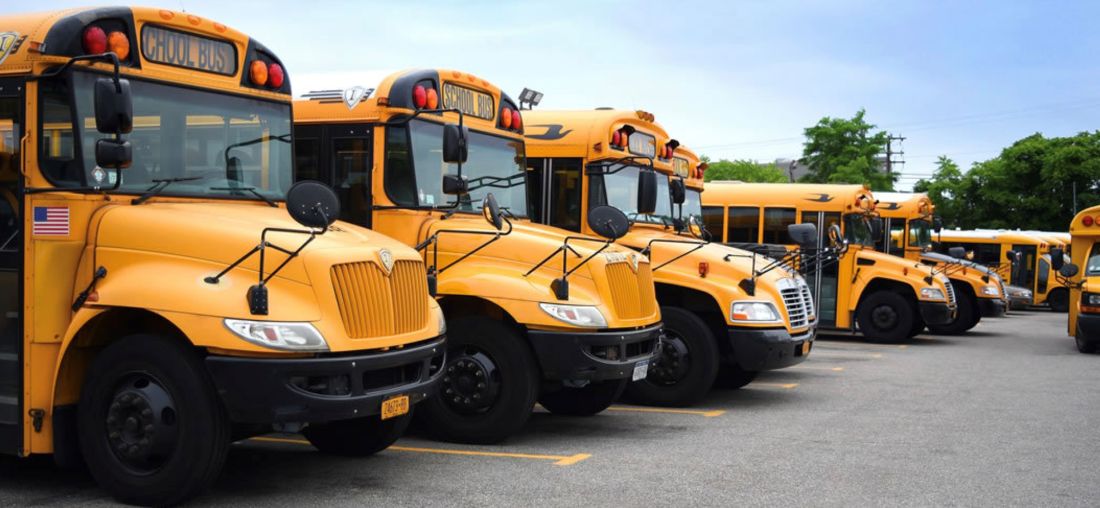
Winter on Long Islandbrings snow, freezing rain, strong coastal winds and sudden temperature swings. For schools, parents, and transportation providers, careful planning and consistent procedures make the difference between safe, on-time transport and disruptions or hazards. These practical tips focus on winter preparedness for student transportationon Long Island — helping keep students, drivers, and staff safe during snow, ice, and freezing conditions.
Why winter planning matters for student transportation Long Island
- Coastal microclimates and freeze–thaw cycles create black ice on bridges and less-traveled side streets.
- Nor’easters and heavy wind-driven snow can create rapid changes in road conditions and visibility.
- Student safety depends on predictable communication, trained drivers, and weather-ready vehicles.
Driver and vehicle readiness
- Winter vehicle maintenance: Ensure school buses and vans receive pre-season inspections— brakes, batteries, heaters/defrosters, windshield wipers, lighting, and coolant with the correct antifreeze mix. Replace worn tires and confirm tire pressure regularly.
- Equip vehicles: Carry winter emergency kits (see list below), road salt or traction mats if allowed, and PBAs (pre-approved accessories) like tire chains where required. Keep extra blankets and boot-safe traction devices on board.
- Cold starts and idling: Establish safe pre-trip warm-up procedures to maintain visibility and occupant comfort without excessive idling. Follow local idling laws and manufacturer guidance.
- Driver training: Reinforce winter driving techniques — slower speeds, longer following distances, smooth braking and steering inputs, and recognizing black ice. Practice emergency maneuvers in a controlled setting before winter.
Route planning and scheduling
- Prioritize primary roads: When possible, route buses on main roads and prioritized plow routes. Avoid steep, narrow, or poorly plowed back roads during extreme conditions.
- Alternate pick-up points: Consider consolidated pick-up/drop-off locations in heavy snowfall to eliminate unsafe standing or walking at sparsely plowed stops.
- Add buffer time: Build additional travel time into schedules to allow slower speeds and unexpected delays. Communicate likely arrival windows to families.
- Dynamic routing: Use up-to-date traffic and weather data to modify routes during storms. Have pre-approved alternative routes and know when to cancel service rather than risk unsafe travel.
Student loading/unloading safety
- Clear, well-lit stops: Ensure bus stops are free of ice and snow where possible. Encourage schools and property managers to keep sidewalks and curb cuts cleared.
- Supervised loading areas: For younger students, station staff or crossing guards where practical during busy or slick conditions. Reinforce no-running policies on slippery surfaces.
- Visibility precautions: Require bright outerwear or reflective accessories for students walking to stops during early/late hours. Backpack safety — avoid loose straps that can snag on handles in icy conditions.
Communication and decision-making
- Clear school policies: Ensure district administrators and transportation teams share consistent criteria for delays, early dismissals, and cancellations based on weather thresholds and road assessments.
- Parent notifications: Use automated alerts, email, and social media to inform families quickly about schedule changes. Provide expected windows and safety tips for pickup points.
- Driver reporting: Give drivers a straightforward process to report hazardous sections, road closures, or unsafe stops so dispatch can re-route or alert schools quickly.
- Coordination with public services: Monitor county and town plow schedules and public safety advisories to align routing decisions with actual road conditions.
Emergency preparedness
- On-board emergency kit: Include first-aid supplies, water, high-calorie non-perishable snacks, a flashlight with extra batteries, a portable phone charger, reflective triangles, warm blankets, a small shovel, and sand or kitty litter for traction.
- Training for cold-weather incidents: Train drivers and attendants in hypothermia signs, basic first aid, and sheltering-in-place procedures if stuck during severe weather.
- Contingency staffing: Maintain a roster of backup drivers and support staff who can respond to sudden call-ins or extended routes caused by weather.
Tips for parents and guardians
- Be ready early: In heavy snow or low visibility, have children prepared to leave earlier than usual for bus stops or walk days.
- Dress for the weather: Layers, waterproof boots, warm gloves, and hats reduce the risk of cold exposure if a bus is delayed.
- Know the plan: Keep contact information current with the school, and sign up for district alerts. Understand early-dismissal procedures and authorized adult pick-up policies.
- Reinforce safety rules: Remind students to wait at a safe distance from the road, board and exit in an orderly way, and avoid retrieving dropped items until they’re safe.
Checklist: Winter essentials for student transportation Long Island
- Pre-season vehicle inspection and winter tires
- Driver refresher training on winter operations
- On-board emergency kit (listed above)
- Alternate routes and consolidated stops plan
- Parent notification and district decision-making protocol
- Backup staffing and communication plan
Closing — keep student trips safe this winter
Winter on Long Island demands preparation and coordination. Whether you manage district transportation, run a private fleet, or are a parent planning daily rides for students, these best practices reduce risk and improve response during snow, ice, and freezing conditions.
For dependable, winter-ready student transportation Long Island schools and organizations rely on, contact WE Transport. Call us today at (516) 349-8200 or fill out our quick quote formto request a free estimate.